What Is a Synonym for Default?
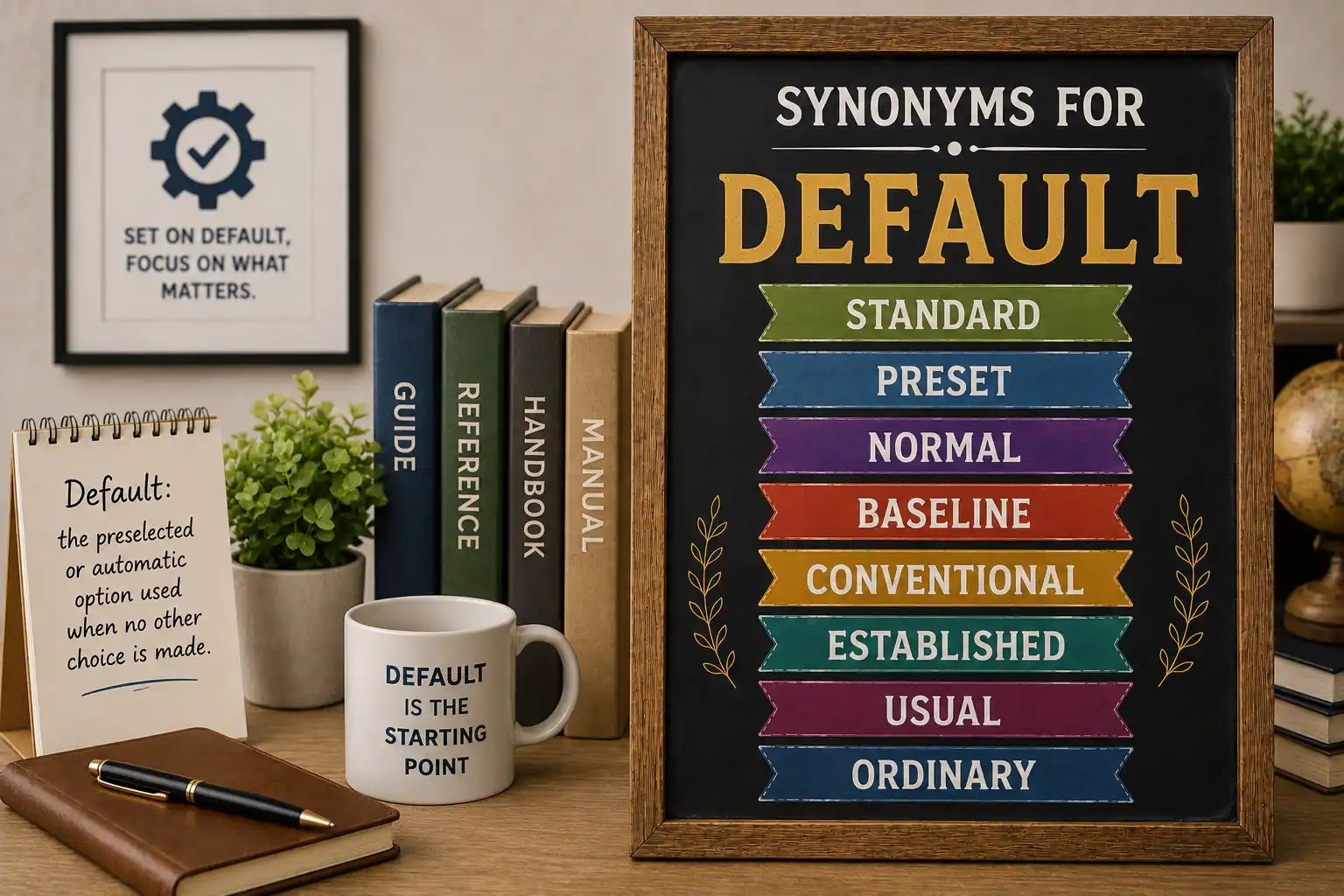
A synonym for default is a word that means the same as the standard, preset, or automatic option that applies unless someone changes it. Common examples include standard, preset, usual, and normal. These words work well in tech, writing, and everyday conversation.
Have you ever opened a new phone and seen the words “default settings”? That word, default, shows up everywhere. It means the setting or choice that is already there before you change it. Your phone has a default ringtone. Your browser has a default homepage. Even your printer has a default paper size.
But saying “default” over and over can get boring, especially if you write blogs, essays, or emails. That’s where synonyms for default come in handy. Learning other words for default helps your writing sound fresh and natural. It also helps ESL learners and students expand their vocabulary quickly.
In this guide, you’ll find real, dictionary-supported synonyms for default, grouped by how they’re used. Each one comes with a simple meaning and two example sentences, so you can start using them right away.
True Synonyms for Default
These words can genuinely replace “default” in most everyday sentences.
Standard
Meaning: Standard means the normal or usual choice that most people expect.
Examples: The phone comes with a standard wallpaper. This is the standard font used in the document.
Preset
Meaning: Preset means something that is already set up before you use it.
Examples: The oven has a preset temperature for baking bread. I changed the preset volume on my speakers.
Usual
Meaning: Usual means the thing that normally happens or is normally chosen.
Examples: Let’s meet at our usual coffee shop. He took the usual route home from work.
Normal
Meaning: Normal means typical or expected, without anything unusual added.
Examples: The normal setting works fine for most users. She wore her normal outfit for the meeting.
Regular
Meaning: Regular means the common or basic version of something.
Examples: I’ll have the regular size coffee, please. The app opens in regular mode by default.
Typical
Meaning: Typical means showing the usual features or behavior of something.
Examples: This is a typical response from customer support. A typical school day starts at eight in the morning.
Automatic
Meaning: Automatic means something that happens on its own, without extra effort.
Examples: The lights turn on automatic when it gets dark. Updates install automatically unless you turn that off.
Baseline
Meaning: Baseline means the starting point used for comparison.
Examples: We measured our baseline speed before upgrading the internet. The baseline price for the plan is ten dollars.
Formal and Technical Terms
These words are common in tech manuals, software, and formal writing.
Predefined
Meaning: Predefined means decided or created in advance, before someone uses it.
Examples: The software offers several predefined templates. You can choose from predefined categories in the form.
Preconfigured
Meaning: Preconfigured means already set up and ready to use right away.
Examples: The laptop arrives preconfigured with basic software. Our router is preconfigured for home Wi-Fi.
Factory Setting
Meaning: Factory setting means the original setup a device had when it was made.
Examples: I reset my phone to its factory setting. The factory setting for brightness is medium.
Initial Setting
Meaning: Initial setting means the very first setup before any changes are made.
Examples: The initial setting for the alarm was 7 a.m. Please review the initial setting before saving changes.
Everyday and Informal Usage Terms
These words feel casual and are common in daily conversation.
Go-To
Meaning: Go-to means the first or usual choice someone picks.
Examples: Pizza is my go-to order on Friday nights. This app is my go-to tool for taking notes.
Out-of-the-Box
Meaning: Out-of-the-box means how something works right after you get it, with no setup.
Examples: The camera works great out-of-the-box. Out-of-the-box, the app already has useful features.
Related Terms (Not Direct Synonyms)
These words connect to the idea of “default” but aren’t exact substitutes. Use them carefully, since they add a slightly different meaning.
Fallback
Meaning: Fallback means an option used when the first choice fails or isn’t available.
Examples: If the internet fails, we have a fallback plan. The app uses a fallback language if translation is missing.
Failsafe
Meaning: Failsafe means a backup system designed to prevent failure or damage.
Examples: The elevator has a failsafe in case the power goes out. Engineers built a failsafe into the machine’s design.
Frequently Asked Questions
What is another word for default?
Common alternatives include standard, preset, usual, and normal, depending on the sentence.
What is a synonym for default in technology?
In tech, people often use preconfigured, factory settings, or predefined instead of default.
Is “fallback” the same as “default”?
Not exactly. Fallback usually means a backup choice used only when the main option fails, while default is the automatic first choice.
What word can I use instead of default?
“Standard” and “preset” are two of the most natural and widely used replacements.
Why do we use synonyms for default in writing?
Synonyms keep writing interesting and help avoid repeating the same word too many times, which makes your content easier to read.
Conclusion
Learning synonyms for default makes your writing stronger, whether you’re crafting a blog post, an essay, or a work email. Words like standard, preset, and usual let you express the same idea without sounding repetitive. Try using a few of these in your next conversation or piece of writing. The more you practice, the more natural they’ll feel and your English will sound clearer and more confident every time.