What Is a Synonym for Metrics?
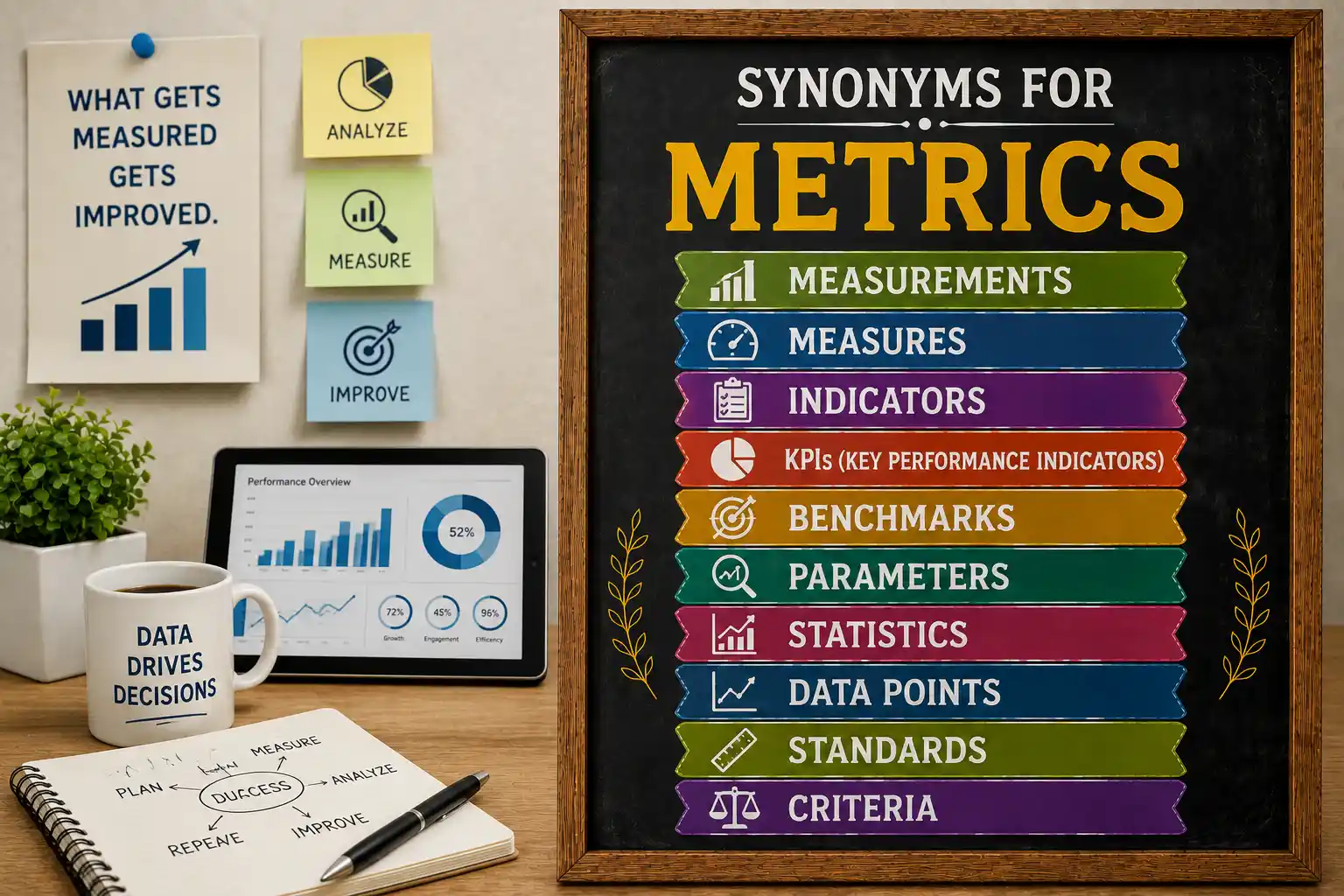
A synonym for metrics is a word that describes numbers or data used to measure something. Common examples include statistics, measurements, indicators, and benchmarks. These words are often used in business, science, and everyday writing to talk about performance or progress without repeating the word “metrics” over and over.
Have you ever written a report and used the word “metrics” five times in one paragraph? Most writers have. Maybe you were tracking sales metrics for a team meeting, or checking website metrics for a blog. The word “metrics” is useful, but it gets repetitive fast.
In simple English, metrics are numbers that show how something is performing. They help us measure results, track goals, and make smart decisions. Learning synonyms for metrics gives your writing more variety. It also helps students, bloggers, and content writers sound more natural and professional. Whether you’re writing a business report or a school essay, knowing different words like metrics can make your work clearer and more interesting to read.
True Synonyms for Metrics
These words can directly replace “metrics” in most sentences without changing the meaning.
Measurements
Meaning: Measurements are numbers that show the size, amount, or level of something.
Examples: Our team reviews weekly measurements to see how the campaign is doing. The scientist recorded careful measurements during the experiment.
Statistics
Meaning: Statistics are facts and numbers collected to study or explain something.
Examples: The report shared statistics about customer satisfaction. She used sports statistics to compare the two players.
Indicators
Meaning: Indicators are signs or numbers that show how well something is going.
Examples: Sales growth is a strong indicator of business success. Teachers use test scores as indicators of student progress.
Benchmarks
Meaning: Benchmarks are standard points used to compare results or progress.
Examples: The company set new benchmarks for customer service response times. We compared our results against industry benchmarks.
Measures
Meaning: Measures are ways of showing how much or how big something is.
Examples: The survey included several measures of employee happiness. Doctors use different measures to track a patient’s health.
Data Points
Meaning: Data points are single pieces of information collected during research or tracking.
Examples: Each data point on the graph shows one day of website visits. Researchers gathered thousands of data points before drawing conclusions.
Formal or Technical Terms
These words are more common in business, science, or academic writing.
Parameters
Meaning: Parameters are limits or values used to measure or control something.
Examples: The engineer adjusted the system’s parameters to improve speed. Our project has strict budget parameters to follow.
Indices
Meaning: Indices are numbers used to compare data over time or between groups.
Examples: The stock market indices dropped slightly this week. Economists track price indices to understand inflation.
Quantitative Measures
Meaning: Quantitative measures are numbers used to describe facts in an exact way.
Examples: The study relied on quantitative measures instead of opinions. We use quantitative measures to compare product performance fairly.
Key Performance Indicators (KPIs)
Meaning: Key performance indicators are specific numbers businesses use to track success.
Examples: Our marketing team reviews KPIs every Monday morning. Revenue growth is one of our most important KPIs.
Everyday and Informal Usage Terms
These simpler words are common in casual conversation and everyday writing.
Numbers
Meaning: Numbers are simple figures used to describe how much of something there is.
Examples: Let’s check the numbers before we make a decision. The manager wasn’t happy with last month’s numbers.
Stats
Meaning: Stats is a short, casual way to say statistics.
Examples: Can you send me the app’s download stats? He loves checking his fitness app stats every morning.
Figures
Meaning: Figures are numbers that show facts, results, or amounts.
Examples: The sales figures were higher than expected this quarter. She double-checked the figures before sending the report.
Related Terms (Connected in Meaning, Not Direct Substitutes)
These words relate closely to metrics but aren’t always exact replacements.
Standards
Meaning: Standards are levels of quality or performance that are expected or required.
Examples: The factory follows strict safety standards. Our writing must meet the company’s editorial standards.
Criteria
Meaning: Criteria are rules or conditions used to judge or measure something.
Examples: The judges used clear criteria to score each project. Meeting the eligibility criteria is the first step in applying.
Yardsticks
Meaning: A yardstick is something used as a standard to judge or compare things.
Examples: Customer reviews are a useful yardstick for service quality. Many teachers use test results as a yardstick for learning.
Why Synonyms for Metrics Matter in Writing
Using different words like metrics helps your writing feel fresh and professional. Repeating the same word too often can feel boring or robotic, especially in reports, essays, and blog posts. Synonyms also help readers understand your message from different angles.
For example, a marketing report might use “KPIs” for goals, “figures” for casual updates, and “benchmarks” for comparisons. This variety keeps writing clear and easy to follow, even when the topic is technical.
Frequently Asked Questions
What is another word for metrics?
Common alternatives include measurements, statistics, indicators, and benchmarks. Each word fits slightly different situations, so context matters.
What is a synonym for metrics in business writing?
In business, “key performance indicators (KPIs)” and “benchmarks” are often used instead of metrics. These terms are common in reports and performance reviews.
Is “metric” the singular form of “metrics”?
Yes, “metric” is singular and “metrics” is plural. Both refer to a measurement, but “metrics” usually describes a group of measurements used together.
What word can I use instead of metrics in everyday conversation?
Casual alternatives like “numbers,” “stats,” or “figures” work well in everyday conversation. They sound less formal than words like “quantitative measures.”
Why do we use synonyms for metrics in writing?
Synonyms prevent repetition and make writing sound more natural. They also help match the right tone, whether the writing is formal, technical, or casual.
Conclusion
Learning synonyms for metrics gives your writing more color and precision. Instead of repeating the same word, you can choose from options like statistics, indicators, benchmarks, or KPIs depending on the situation. This small change makes emails, essays, and blog posts easier and more enjoyable to read. Try using a few of these words the next time you write about numbers or performance. Your writing will feel more natural, confident, and professional.