Have you ever written the word “meant” three times in one paragraph and felt something was off? You are not alone. Many students, bloggers, and writers reach for “meant” again and again, even when a fresher word would sound better.
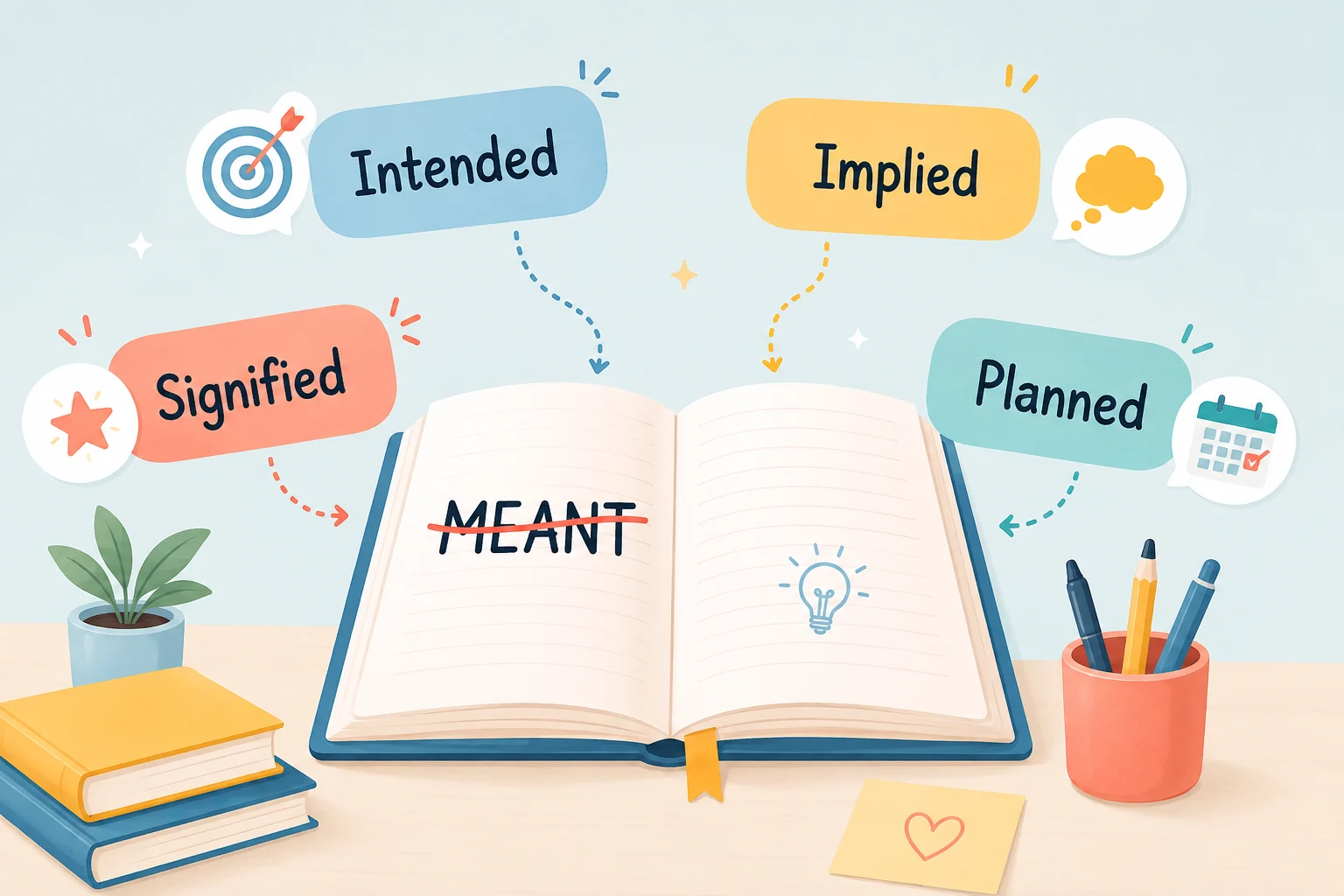
A synonym for “meant” is a word that expresses the same idea of intending, signifying, or planning something. Common examples include intended, implied, signified, and indicated. These words let you say the same thing in a clearer or more precise way, depending on the situation.
Here is a simple example. Instead of saying “I meant to call you,” you could say “I intended to call you.” Both sentences carry the same message, but the second one sounds a little more formal. This is exactly why learning synonyms for “meant” matters. Whether you are writing an essay, a blog post, or a quick email, having more words for “meant” helps you avoid repetition and sound more natural. Let’s explore some of the best alternatives you can start using right away.
Intended
Meaning: This word means you planned to do something on purpose.
Examples:
- I intended to finish the report before lunch, but the meeting ran late.
- She intended her comment as a joke, not an insult.
Planned
Meaning: This word means you thought about something ahead of time and decided to do it.
Examples:
- We planned to visit the museum this weekend, but it rained.
- He planned his speech carefully before the interview.
Aimed
Meaning: This word means you tried to reach a certain goal or result.
Examples:
- Her advice was aimed at helping new employees settle in.
- The ad campaign was aimed at younger audiences.
Designed
Meaning: This word means something was made or planned with a clear purpose in mind.
Examples:
- The course was designed to teach beginners the basics of coding.
- This app was designed to make grocery shopping easier.
Purposed
Meaning: This word means you set your mind on doing something specific.
Examples:
- The committee proposed to review every application fairly.
- He proposed in his heart to change his old habits.
Destined
Meaning: This word means something was meant to happen because of fate or a strong plan.
Examples:
- Many people believe they were destined to find their true calling.
- The old bridge seemed destined to collapse after years of neglect.
Signified
Meaning: This word means something stood for or represented an idea.
Examples:
- The white dove signified peace during the ceremony.
- Her silence signified that she disagreed with the plan.
Denoted
Meaning: This word means something clearly showed or pointed to a specific meaning.
Examples:
- The red flag denoted danger along the coastline.
- In the report, the asterisk denoted an important note.
Connoted
Meaning: This word means something suggesting a feeling or idea beyond its basic meaning.
Examples:
- The word “home” connoted comfort and safety for her.
- His tone connoted frustration, even though his words were polite.
Purported
Meaning: This word means something was claimed to be true, though it may not be certain.
Examples:
- The email purported to be from the bank, but it was a scam.
- The document purported to show proof of ownership.
Was Supposed To
Meaning: This phrase means something was expected or planned to happen.
Examples:
- I was supposed to meet her at noon, but my train was delayed.
- This gift was supposed to be a surprise for your birthday.
Was Going To
Meaning: This phrase means you had a plan to do something.
Examples:
- We were going to leave early, but the car wouldn’t start.
- He was going to tell her the truth eventually.
Figured
Meaning: This informal word means you thought or believed something was true or planned.
Examples:
- I figured you would want to know about the schedule change.
- She figured her joke would make everyone laugh.
Implied
Related terms. This word means something was suggested without being said directly.
Examples:
- His silence implied that he was upset about the decision.
- The manager implied that changes were coming soon.
Indicated
Related terms. This word means something pointed to a fact or a likely result.
Examples:
- The report indicated a rise in customer satisfaction.
- Her expression indicated that something was wrong.
Suggested
Related terms. This word means something hinted at an idea or possibility.
Examples:
- His tone suggested he was not fully convinced.
- The data suggested a need for better training.
Expressed
Related terms. This word means a feeling or idea was shown clearly through words or actions.
Examples:
- She expressed her gratitude with a heartfelt letter.
- The painting expressed a deep sense of loss.
Conveyed
Related terms. This word means information or feeling was successfully passed to someone else.
Examples:
- His speech conveyed a strong sense of hope.
- The email conveyed the urgency of the situation.
Frequently Asked Questions
What is another word for “meant”?
Common alternatives include intended, planned, aimed, and designed. The best choice depends on whether you want to focus on intention, purpose, or meaning.
What is a synonym for “meant” when talking about intentions?
When describing intentions, intended or planned work well. For example, “I intended to help” carries the same idea as “I meant to help.”
What word can I use instead of “meant” when explaining a symbol or sign?
Try signified or denoted. These words work better when you are explaining what something represents rather than what someone planned.
Is “implied” the same as “meant”?
Not exactly. “Implied” suggests something without stating it directly, while “meant” often refers to a clear intention or definition. They are related but not always interchangeable.
Why do we use synonyms for “meant” in writing?
Synonyms help writing feel fresh and avoid repetition. They also let you express intention, meaning, or purpose with more precision, depending on your sentence.
Conclusion
Learning synonyms for “meant” gives your writing more variety and clarity. Instead of repeating the same word, you can choose one that fits your exact meaning, whether that’s intention, purpose, or symbolism. Try using a few of these words in your next email, essay, or blog post. With practice, switching between words like intended, implied, and signified will start to feel natural, and your writing will sound more confident and polished.