
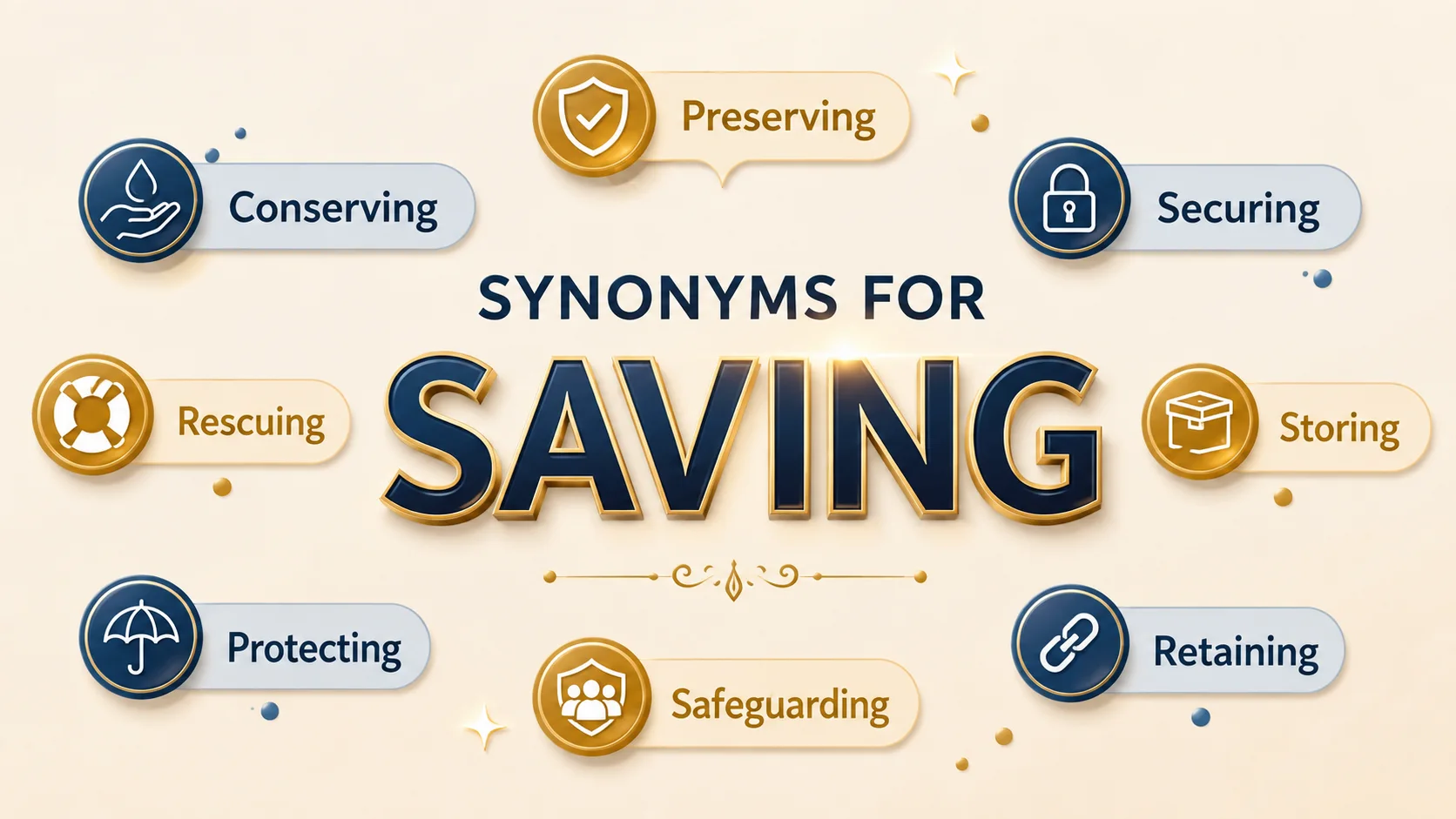
Have you ever written the word “saving” three times in one paragraph and felt stuck? Maybe you were writing a blog post about money, or telling a friend how you’re saving for a trip. That’s when you need synonyms for saving.
What is a synonym for saving? A synonym for saving is a word that means to keep, protect, or set aside money or resources instead of spending or losing them. Common examples include economizing, conserving, budgeting, and thrift. Each word carries a slightly different shade of meaning.
Saving is something we all do. You save money in a bank. You save time by planning ahead. You save energy by turning off lights. Using different words for saving makes your writing feel fresh and natural. It also helps students, bloggers, and everyday speakers sound more confident in English.
In this guide, you’ll find real, useful synonyms for saving. Each one comes with a simple meaning and two example sentences, so you can start using them right away.
True Synonyms for Saving
These words can replace “saving” in most everyday situations, especially when talking about money or resources.
Economizing
Meaning: Economizing means spending less money on purpose to save it.
Examples:
- My family started economizing after we moved to a bigger house.
- Economizing on small things, like coffee, can add up over a year.
Conserving
Meaning: Conserving means using something carefully so it does not run out.
Examples:
- We are conserving water during the dry summer months.
- Conserving electricity helps lower your monthly bill.
Budgeting
Meaning: Budgeting means planning how to spend and save your money each month.
Examples:
- She started budgeting so she could save for a new laptop.
- Budgeting every week helps you avoid overspending.
Setting aside
Meaning: Setting aside means putting money away for later use.
Examples:
- He is setting aside fifty dollars from every paycheck.
- We’re setting aside money for our daughter’s education.
Putting away
Meaning: Putting away means storing money safely so you can use it in the future.
Examples:
- They put away a little money every month for emergencies.
- I’ve been putting away extra cash since I got my raise.
Stockpiling
Meaning: Stockpiling means collecting and storing a large amount of something for future need.
Examples:
- The store owner is stockpiling supplies before winter.
- We’re stockpiling canned food in case of an emergency.
Formal and Technical Terms
These words are common in finance, business, and academic writing.
Retrenchment
Meaning: Retrenchment means cutting costs, often in a company or government budget.
Examples:
- The company announced retrenchment measures to reduce spending.
- Retrenchment in the department led to a smaller team.
Fiscal prudence
Meaning: Fiscal prudence means being careful and wise with money, especially in business or government.
Examples:
- The mayor was praised for her fiscal prudence during the crisis.
- Fiscal prudence helped the company survive a tough year.
Accumulation
Meaning: Accumulation means the slow gathering of money or resources over time.
Examples:
- Years of accumulation allowed him to retire early.
- The accumulation of small savings can lead to a big fund.
Retention
Meaning: Retention means keeping something instead of using it or giving it away.
Examples:
- Cash retention is important for small businesses during slow months.
- The retention of profits helped the company grow.
Everyday and Informal Usage Terms
These casual words are perfect for conversations, blogs, and social media.
Scrimping
Meaning: Scrimping means spending very little money, sometimes more than necessary.
Examples:
- We’ve been scrimping all year to afford this vacation.
- Scrimping on groceries left them eating the same meals every week.
Penny-pinching
Meaning: Penny-pinching means being extremely careful, sometimes too careful, with small amounts of money.
Examples:
- My grandfather was known for his penny-pinching habits.
- Penny-pinching helped her pay off her debt faster.
Squirreling away
Meaning: Squirreling away means quietly and steadily saving money, like a squirrel storing nuts.
Examples:
- She’s been squirreling away cash for a rainy day.
- He squirreled away part of every bonus he received.
Tightening the belt
Meaning: Tightening the belt means spending less money because times are hard.
Examples:
- After losing his job, he had to tighten his belt.
- The whole family tightened their belts during the recession.
Related Terms
These words connect closely to saving but are not always direct replacements.
Investing
Meaning: Investing means putting money into something, like stocks or a business, hoping it grows over time.
Examples:
- Instead of just saving, she started investing in mutual funds.
- Investing early can build more wealth than saving alone.
Frugality
Meaning: Frugality is the habit of living simply and avoiding unnecessary spending.
Examples:
- Frugality allowed them to buy a house in just five years.
- His frugality sometimes surprised his wealthy friends.
Why Synonyms for Saving Matter
Using different words for saving makes your writing more interesting. It also shows a stronger grasp of English. Instead of writing “I am saving money” five times in one essay, you can write “I am economizing,” “I am setting aside cash,” or “I practice frugality.” This keeps readers engaged and shows real language skill.
For bloggers and content writers, synonyms also help with SEO. Search engines reward content that uses natural, varied language around a topic instead of repeating the same word over and over.
FAQs About Synonyms for Saving
What is another word for saving?
Common alternatives include economizing, conserving, budgeting, and setting aside.
What is a synonym for saving in personal finance?
In finance, people often use “budgeting,” “accumulation,” or “fiscal prudence” to describe saving money.
What word can I use instead of saving?
You can use “conserving” for resources, “economizing” for spending less, or “stockpiling” for storing supplies.
Is “saving” spelled differently anywhere?
No, “saving” keeps the same spelling in both American and British English, though related words like “economising” (British) versus “economizing” (American) do change.
Why do we use synonyms for saving in writing?
Synonyms make writing sound natural, avoid repetition, and help readers stay interested from start to finish.
Conclusion
Learning synonyms for saving can make your writing and speaking much stronger. Whether you’re budgeting for a trip, conserving energy at home, or simply economizing on daily expenses, having the right word makes your message clear. Try using one or two of these words in your next email, essay, or conversation. Small changes like this build big confidence in English over time.