What Is a Synonym for Joking?
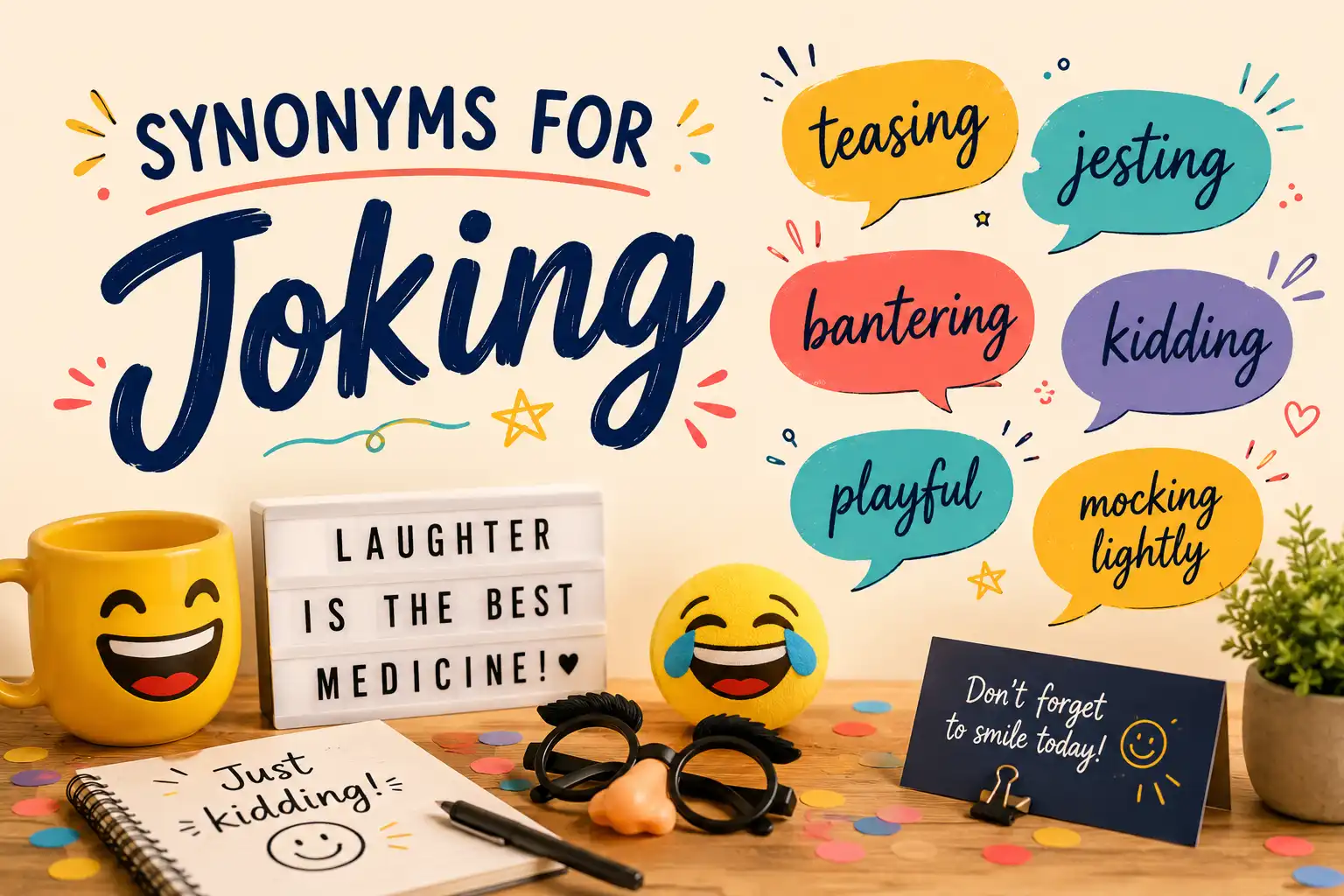
A synonym for joking is any word that means saying something funny or not serious, just for fun. Common synonyms for joking include kidding, jesting, teasing, and joshing. These words describe playful talk meant to make people laugh, not to be taken seriously.
Have you ever said something silly to a friend, and they asked, “Wait, are you joking?” We all joke around sometimes. Maybe you tease a sibling, or you make a funny comment at work. Joking is a normal part of daily life.
But if you use the word “joking” over and over in your writing, it can start to feel flat. That’s where synonyms for joking come in handy. Learning new words like kidding, teasing, and jesting helps students, bloggers, and everyday speakers sound more natural and expressive.
In this guide, you’ll find real, dictionary-supported synonyms for joking. Each one comes with a simple meaning and two easy example sentences. Whether you’re writing an essay, a blog post, or just chatting with friends, these words for joking will help you say exactly what you mean.
True Synonyms for Joking
These words can replace “joking” in most everyday sentences.
Kidding
Meaning:
Kidding means saying something that is not true, just to be funny.
Examples:
- “I got you a puppy!” she said, but she was only kidding.
- Relax, I’m kidding I didn’t really eat your lunch.
Jesting
Meaning:
Jesting means speaking in a playful, funny way, often using clever words.
Examples:
- The king’s fool was famous for jesting at every royal dinner.
- He wasn’t angry at all; he was just jesting with his coworkers.
Teasing
Meaning:
Teasing means making light fun of someone in a friendly, playful way.
Examples:
- My big brother is always teasing me about my messy room.
- Don’t take it personally; she was only teasing you about your haircut.
Joshing
Meaning:
Joshing means joking with someone in a light, friendly manner.
Examples:
- “You’re not really moving to Mars,” he laughed, “you’re joshing me, right?”
- The old friends spent the evening joshing about high school.
Bantering
Meaning:
Bantering means exchanging playful, witty comments back and forth with someone.
Examples:
- The two comedians spent the whole interview bantering about their childhood.
- Coworkers often start meetings with a bit of light bantering.
Wisecracking
Meaning:
Wisecracking means making a clever, funny remark, often quickly and unexpectedly.
Examples:
- He couldn’t help wisecracking during the boring safety presentation.
- The wisecracking waiter made our whole table laugh out loud.
Quipping
Meaning:
Quipping means making a short, clever, and funny comment.
Examples:
- “Nice parking job,” she quipped, spotting his crooked car.
- The host kept quipping between songs, keeping the crowd entertained.
Ribbing
Meaning:
Ribbing means gently teasing someone, usually in a friendly way.
Examples:
- The team gave him some good-natured ribbing after he tripped on stage.
- My dad still gives me a bit of ribbing about my old haircut.
Everyday / Informal Usage Terms
These casual expressions are common in spoken English and informal writing.
Fooling Around
Meaning:
Fooling around means acting silly or playful instead of being serious.
Examples:
- The kids were fooling around in the backyard instead of doing chores.
- Stop fooling around and help me carry these boxes, please.
Messing Around
Meaning:
Messing around means playing or joking in a casual, carefree way.
Examples:
- We were just messing around with some old jokes from school.
- He’s not really upset with you; he’s just messing around.
Horsing Around
Meaning:
Horsing around means playing in a rough or noisy, playful way.
Examples:
- The puppies were horsing around all over the living room floor.
- The boys got in trouble for horsing around during class.
Goofing Around
Meaning:
Goofing around means acting silly instead of being serious or focused.
Examples:
- Instead of studying, they spent the afternoon goofing around online.
- I was just goofing around with my camera and made this funny video.
Pulling Someone’s Leg
Meaning:
Pulling someone’s leg means telling them something untrue as a friendly joke.
Examples:
- “You won the lottery? No way!” “Relax, I’m pulling your leg.”
- He told me he saw a UFO, but he was just pulling my leg.
Clowning Around
Meaning:
Clowning around means behaving in a silly, exaggerated, funny way.
Examples:
- Stop clowning around; the teacher is about to start the lesson.
- The kids loved watching him clowning around at the birthday party.
Related Terms (Not Direct Synonyms)
These words connect closely to joking, but they describe related ideas, not exact replacements.
Humor
Meaning:
Humor is the quality of being funny or amusing in general.
Examples:
- Her sense of humor made even boring meetings enjoyable.
- The movie mixed drama with light humor throughout the story.
Sarcasm
Meaning:
Sarcasm is saying the opposite of what you mean, often to mock something.
Examples:
- “Oh great, another Monday,” he said with obvious sarcasm.
- Her sarcasm sometimes confuses people who don’t know her well.
Mockery
Meaning:
Mockery means making fun of someone in an unkind or critical way.
Examples:
- The critics’ mockery of the film went too far this time.
- He felt hurt by the mockery, even though his friends meant no harm.
Why Learning Synonyms for Joking Matters
Using different words for joking makes your writing more interesting and precise. Instead of repeating “joking” in every sentence, you can choose the word that fits the mood exactly. Teasing feels gentle. Wisecracking feels sharp and quick. Jesting sounds old-fashioned and clever.
For students, this variety improves essays and creative writing. For bloggers and content writers, it keeps readers engaged and avoids repetitive text. For everyday speakers, it simply makes conversations more colorful and fun.
FAQs About Synonyms for Joking
What is another word for joking?
Common alternatives include kidding, jesting, teasing, and joshing. Each word has a slightly different tone, but all describe playful, non-serious talk.
What is a synonym for joking in a workplace setting?
In professional settings, “bantering” or “light-hearted teasing” often sound more appropriate than casual terms like “fooling around.”
Is “kidding” the same as “joking”?
Yes, kidding and joking are very close in meaning. Both describe saying something untrue or exaggerated just for fun, without intending to deceive anyone.
What word can I use instead of joking in formal writing?
“Jesting” or “bantering” work well in more formal or literary writing, while “kidding” and “teasing” suit casual, everyday text.
Why do we use synonyms for joking in writing?
Synonyms prevent repetition, add variety, and help writers match the exact tone they want, whether playful, sarcastic, or gentle.
Conclusion
Learning synonyms for joking gives your writing and speech more color and precision. Words like kidding, teasing, and jesting each carry their own flavor, helping you express humor exactly the way you intend. Try using a few of these words in your next email, essay, or conversation. The more you practice, the more naturally they will come to you, and your communication will feel richer and more human.