What Is a Synonym for Calendar?
A synonym for calendar is a word that names a tool or chart used to track days, months, or planned events. Common examples include planner, schedule, diary, agenda, and datebook. These words are used in offices, schools, and homes to organize time.
Why Synonyms for Calendar Matter
Picture this: you write “check the calendar” three times in one paragraph. It feels flat. It feels repetitive. Readers notice.
A calendar is simply a tool that shows dates, days, and events in order. People use a calendar to plan meetings, remember birthdays, or track deadlines. That’s it. Simple.
But English gives us many other words for the calendar. Some are formal. Some are casual. Some fit school essays. Others fit business emails. If you’re a student, blogger, or content writer, knowing these words for the calendar helps your writing feel fresh and natural.
This guide covers real, dictionary-supported synonyms for calendars, grouped by how they’re actually used. Each one comes with a simple meaning and two example sentences. Let’s expand your vocabulary together.
True Synonyms for Calendar
These words can directly replace “calendar” in most everyday sentences.
Schedule
Meaning: A schedule is a plan that shows when things will happen.
Examples:
- I checked my schedule before booking the flight.
- Her work schedule changes every week.
Planner
Meaning: A planner is a book or app used to write down plans and dates.
Examples:
- I write my daily tasks in a planner.
- She bought a new planner for the school year.
Agenda
Meaning: An agenda is a list of things planned for a certain day or meeting.
Examples:
- The manager shared the agenda before the meeting started.
- My agenda for today includes three phone calls.
Diary
Meaning: A diary is a small book where people note daily plans or personal thoughts.
Examples:
- He keeps his appointments in a leather diary.
- I marked her birthday in my diary.
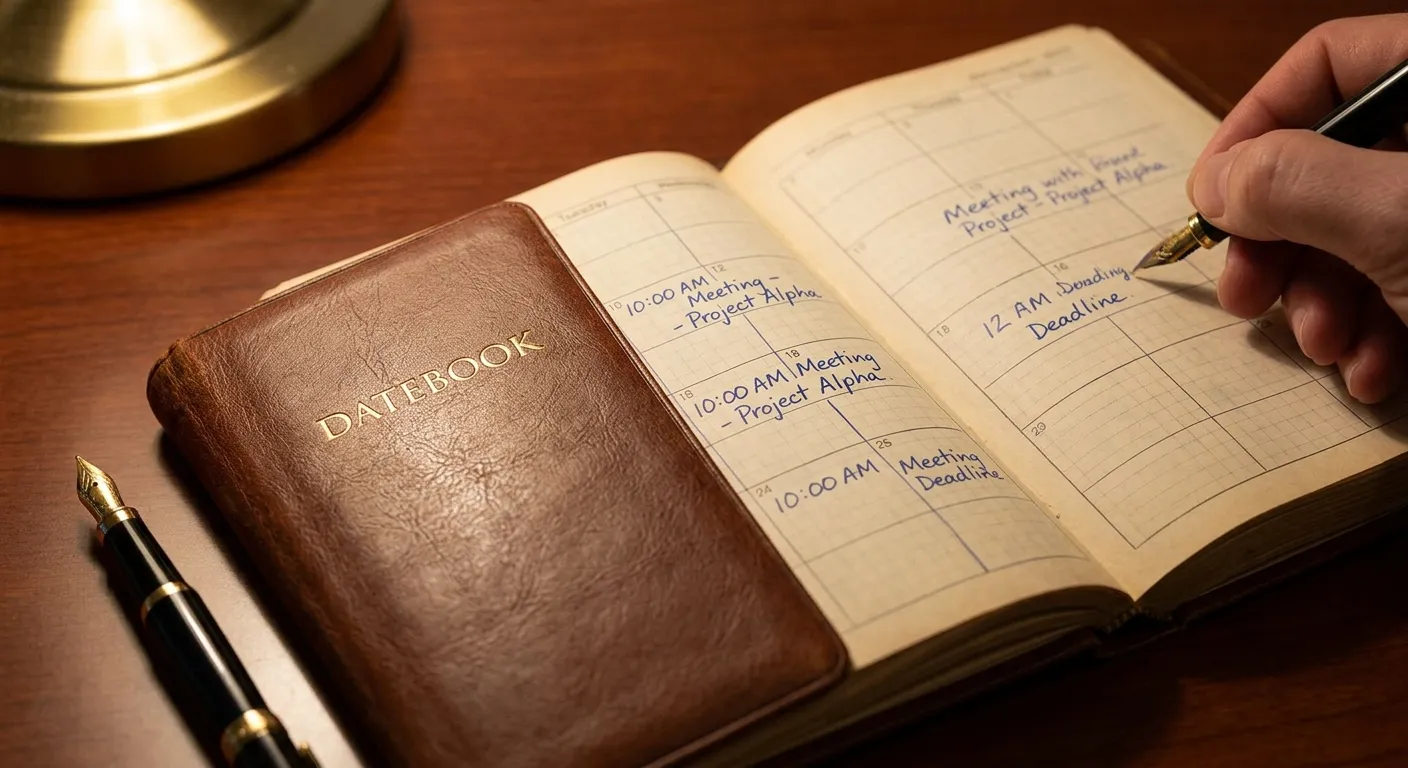
Datebook
Meaning: A datebook is a small notebook used to record dates and appointments.
Examples:
- Grandma still uses a paper datebook, not an app.
- I found the dentist’s number written in my old datebook.
Almanac
Meaning: An almanac is a yearly book that lists dates, seasons, and useful facts.
Examples:
- Farmers often check an almanac before planting crops.
- The old almanac predicted a cold winter.
Timetable
Meaning: A timetable is a chart that shows when events or classes happen.
Examples:
- The school timetable lists every class by hour.
- We checked the train timetable before leaving home.
Organizer
Meaning: An organizer is a tool, book, or app used to plan tasks and events.
Examples:
- My phone’s organizer reminds me of every meeting.
- She uses a paper organizer to plan her week.
Formal and Technical Terms
These words appear in academic, historical, or precise contexts.
Chronology
Meaning: A chronology is a list of events arranged in the order they happened.
Examples:
- The museum displayed a chronology of ancient festivals.
- Historians built a chronology of the empire’s rulers.
Ephemeris
Meaning: An ephemeris is a table that shows the position of stars or planets on certain dates.
Examples:
- Astronomers use an ephemeris to track a comet’s path.
- The old ephemeris helped sailors find their direction at sea.
Register
Meaning: A register is an official record that lists dates, names, or events in order.
Examples:
- The church kept a register of every wedding date.
- The office register shows staff holidays for the year.
Ledger
Meaning: A ledger is a book used to record events, dates, or numbers in order.
Examples:
- The old ledger recorded harvest dates for each season.
- She noted every delivery date in the shipping ledger.
Everyday and Informal Terms
These casual words are common in daily speech and writing.
Day Planner
Meaning: A day planner is a small book made just for writing daily plans.
Examples:
- I keep my day planner on my desk at work.
- He checks his day planner every morning.
Wall Chart
Meaning: A wall chart is a large printed calendar hung on a wall to show dates.
Examples:
- The kitchen wall chart shows everyone’s birthday.
- We marked the holidays on the office wall chart.
Date Pad
Meaning: A date pad is a small stack of paper sheets showing one date per page.
Examples:
- My grandfather still tears a sheet off his date pad each morning.
- The date pad on her desk was full of sticky notes.
Related Terms for Calendar
These words connect closely to “calendar” but are not direct substitutes. Use them carefully, since they carry a slightly different meaning.
Itinerary
Meaning: An itinerary is a detailed plan for a trip, listing places and times.
Examples:
- Our travel itinerary included three cities in five days.
- She emailed the full itinerary to every guest.
Timeline
Meaning: A timeline is a line or chart that shows events in the order they happen.
Examples:
- The project timeline shows every deadline this month.
- Students drew a timeline of major world events.
Log
Meaning: A log is a written record of events, usually noted by date.
Examples:
- The pilot updated the flight log after landing.
- He kept a daily log of his workout progress.
How to Choose the Right Synonym for Calendar
Not every synonym fits every sentence. A planner or organizer works well for daily tasks. A timetable fits school or transport schedules better than a personal diary. An almanac or ephemeris suits farming, astronomy, or history topics, not office meetings.
Before swapping “calendar” for another word, ask: does this word match the context? Formal writing calls for words like register or chronology. Casual blog posts welcome planner, datebook, or day planner. This small check keeps your writing accurate and natural.
Frequently Asked Questions
What is another word for calendar?
Common alternatives include schedule, planner, agenda, diary, and datebook. Each works well in everyday writing and speech.
What is a synonym for calendar in a business context?
In business, people often say schedule, agenda, or organizer instead of calendar, especially when talking about meetings or deadlines.
Is “almanac” the same as “calendar”?
Not exactly. An almanac usually includes yearly facts, weather patterns, or farming tips along with dates, while a calendar simply shows days and months.
What word can I use instead of calendar in a sentence?
You can use a planner, schedule, or datebook. For example: “Check my planner for Friday’s meeting” works just as well as “Check my calendar.”
Why do we use synonyms for calendar in writing?
Synonyms prevent repetition, keep readers interested, and let writers match tone. A formal report may need “register,” while a casual blog fits “planner” better.
Conclusion
Learning synonyms for calendars makes your writing clearer and more interesting. Whether you’re a student writing an essay, a blogger crafting a post, or a professional sending an email, these words give you more ways to talk about time, dates, and plans.
Try using planner, schedule, or agenda in your next piece of writing. Small changes like this build stronger, more natural English over time. Keep practicing, and these words will soon feel like second nature.