What Is a Synonym for Angst?
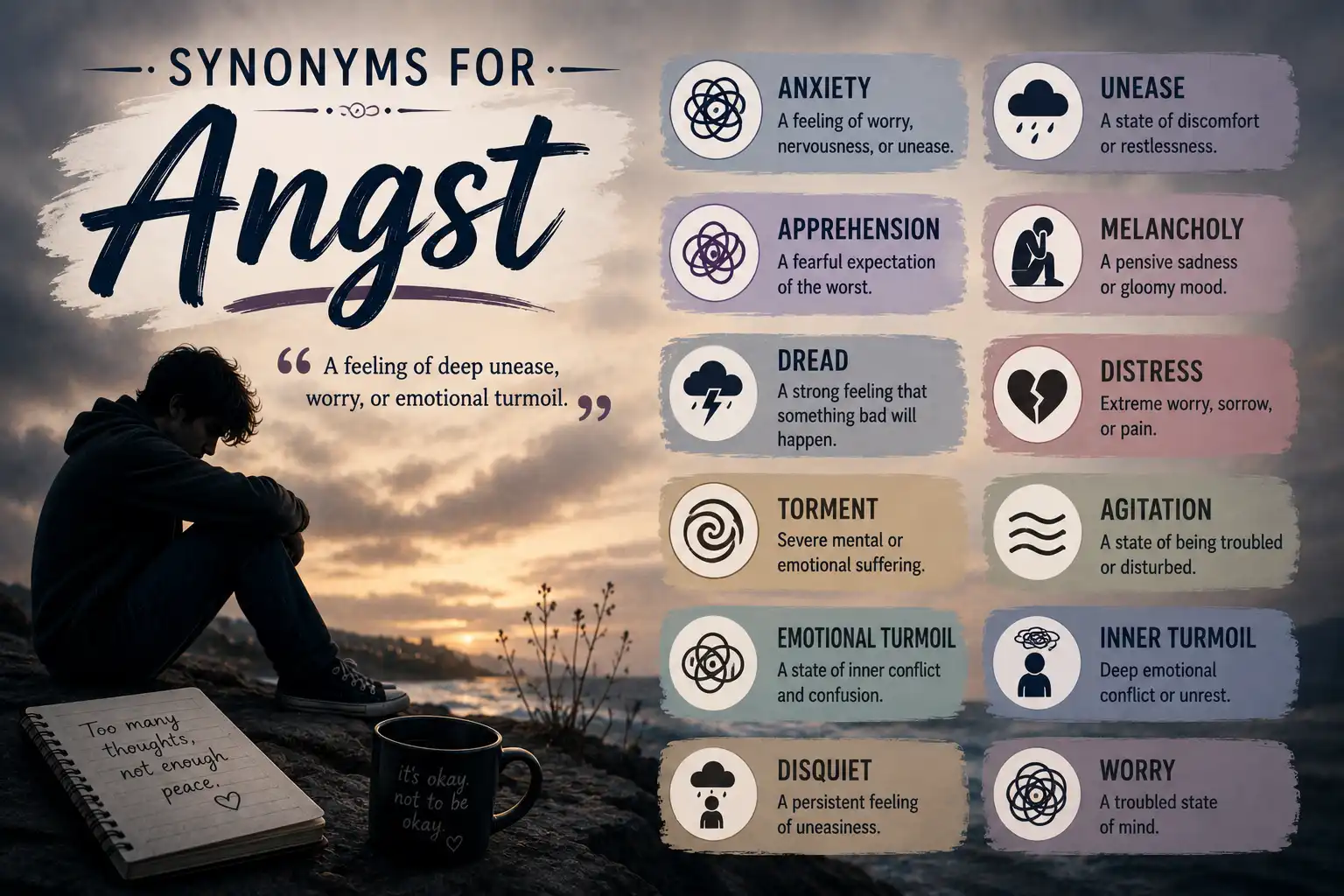
A synonym for angst is a word that describes deep worry, fear, or unease. Common synonyms include anxiety, dread, apprehension, and unease. These words share the same core feeling: a heavy, uncomfortable sense that something is wrong. Writers use them to add variety and emotional depth to their sentences.
Have you ever felt a tight knot in your stomach before a big test? That uneasy feeling has a name: angst. It’s that mix of worry and fear that creeps in when life feels uncertain.
Angst is a simple word, but it carries a lot of weight. It means a strong feeling of anxiety or dread, often about something unclear or hard to control. For example: She felt a wave of angst before walking into the interview room.
Using the same word again and again can make your writing feel flat. That’s why synonyms for angst matter so much. Students need them for essays. Bloggers need them to keep readers interested. Content writers need them to sound natural and avoid repetition.
In this guide, you’ll find real, dictionary-supported words like angst, grouped by how they’re used. Let’s explore them together.
True Synonyms for Angst
These words can replace “angst” in most everyday sentences without changing the meaning much.
Anxiety
Meaning: Anxiety is a strong feeling of worry or fear about something.
Examples:
- Anxiety kept her awake the night before the exam.
- He tried to hide his anxiety during the job interview.
Dread
Meaning: Dread is a deep fear of something that is about to happen.
Examples:
- I felt a sense of dread walking into the dentist’s office.
- The team faced the final match with quiet dread.
Apprehension
Meaning: Apprehension is a nervous feeling about something that may go wrong.
Examples:
- She spoke with apprehension about her first day at the new job.
- There was apprehension in his voice as he opened the letter.
Unease
Meaning: Unease is a mild but constant feeling of worry or discomfort.
Examples:
- A sense of unease filled the room during the meeting.
- He couldn’t shake the unease after the strange phone call.
Worry
Meaning: Worry is a feeling of thinking too much about problems or bad things.
Examples:
- Her worry grew as the storm got closer.
- Try not to let worry take over your whole day.
Nervousness
Meaning: Nervousness is a shaky, uneasy feeling before something important.
Examples:
- His nervousness showed as he shuffled his notes before the speech.
- A little nervousness before a performance is completely normal.
Trepidation
Meaning: Trepidation is a fearful feeling about something uncertain in the future.
Examples:
- She approached the surgery with trepidation but hope.
- They opened the old house’s door with trepidation.
Disquiet
Meaning: Disquiet is a feeling of being troubled or not at peace.
Examples:
- A quiet disquiet settled over the office after the announcement.
- The unusual silence filled him with disquiet.
Formal and Technical Terms Related to Angst
These words are often used in psychology, philosophy, or formal writing.
Existential Angst
Meaning: Existential angst is a deep worry about life’s meaning and purpose.
Examples:
- The philosophy class discussed existential angst in modern literature.
- His late-night thoughts often turned into existential angst.
Malaise
Meaning: Malaise is a general feeling of discomfort or unease without a clear cause.
Examples:
- A sense of malaise spread through the company after the layoffs.
- She described a strange malaise she couldn’t quite explain.
Disquietude
Meaning: Disquietude is a formal word for a lasting feeling of worry or restlessness.
Examples:
- The essay explored the disquietude of modern city life.
- A deep disquietude followed the unsettling news report.
Foreboding
Meaning: Foreboding is a strong feeling that something bad will happen soon.
Examples:
- Dark clouds gave the evening a sense of foreboding.
- She had a foreboding feeling before opening the email.
Everyday and Informal Words for Angst
These casual words work well in conversation, blogs, and informal writing.
Jitters
Meaning: Jitters are small, nervous feelings before something happens.
Examples:
- He always gets the jitters before a big presentation.
- Pre-show jitters are common even for experienced actors.
Butterflies
Meaning: Butterflies describe a fluttery, nervous feeling in your stomach.
Examples:
- She had butterflies before her first date.
- I still get butterflies walking into a new classroom.
The Willies
Meaning: The willies is an informal way to describe a scared or uneasy feeling.
Examples:
- That dark hallway gives me the willies.
- The horror movie gave the whole group the willies.
Related Terms Connected to Angst
These words share a similar feeling with angst but aren’t always direct substitutes. Use them carefully based on context.
Distress
Meaning: Distress is a strong feeling of pain, worry, or trouble.
Examples:
- The lost hikers signaled their distress with a flare.
- Financial distress can affect a person’s sleep and mood.
Anguish
Meaning: Anguish is severe mental or emotional suffering.
Examples:
- The family felt deep anguish after the difficult news.
- Her anguish was clear in every word of the letter.
Why Learning Synonyms for Angst Helps Your Writing
Knowing different words like angst helps you avoid repeating the same term over and over. It also lets you match the right tone to the right situation. “Jitters” fits a casual blog post, while “existential angst” fits a formal essay or literary analysis.
This small habit makes a big difference. Your writing feels more natural, more precise, and more engaging. Readers stay interested when your words don’t repeat themselves.
Frequently Asked Questions
What is another word for angst?
Common alternatives include anxiety, dread, apprehension, and unease. Each carries a slightly different shade of meaning, so choose based on context.
What is a synonym for angst in psychology or philosophy?
In these fields, “existential angst” is often used to describe deep worry about life, meaning, and purpose.
Is angst the same as anxiety?
They are closely related, but angst often suggests a deeper, sometimes existential worry, while anxiety can describe everyday nervousness too.
What word can I use instead of angst in casual writing? Try “jitters,” “butterflies,” or “the willies” for a lighter, more conversational tone.
Why do we use synonyms for angst in writing?
Synonyms prevent repetition, add emotional variety, and help writers match their tone to formal, casual, or literary contexts.
Conclusion
Learning synonyms for angst gives your writing more color and precision. If you’re crafting a blog post, an email, or a school essay, these words help you express worry and unease in fresh, natural ways.
Try using a few of these synonyms in your next piece of writing. Small changes like this make your English sound more confident and more human one word at a time.